
For most medical students, the phrase “step 1 medical school” induces a mix of adrenaline and anxiety. It is the first major hurdle in the long marathon of medical licensure. Understanding exactly what this exam entails is the first step toward conquering it.
This guide breaks down everything you need to know about the exam, from its basic science focus to the modern pass/fail system.
The USMLE Step 1 is a one-day licensing exam that assesses your understanding of the Basic Sciences foundational to medical practice. It is now a pass/fail system, meaning residency programs no longer see a specific score. Preparation typically requires a dedicated study period, high-yield resources like First Aid, and extensive use of a Question Bank.
So, what is Step 1 medical school assessment all about? It is the first of three exams required for medical licensure in the United States. Sponsored by the Federation of State Medical Boards (FSMB) and the National Board of Medical Examiners (NBME), it acts as the gateway between your pre-clinical years and your clinical rotations.
The exam ensures you have mastered the scientific concepts required to practice medicine safely. It emphasizes the application of Basic Science principles like anatomy, pathology, and pharmacology to clinical scenarios. It’s not just about memorizing facts; it’s about understanding the mechanisms of health and disease processes.
Step 1 is taken by:
Even without a numerical score, passing is mandatory to obtain a medical license. Furthermore, the knowledge you build here forms the foundation for Step 2 CK (Clinical Knowledge), which does still have a numerical score used for residency applications.

As of January 2022, Step 1 transitioned to reporting outcomes only as Pass or Fail. You will not receive a 3-digit score. This shift aims to reduce the “score creep” obsession that plagued medical education for years.
The change was designed to improve student well-being and broaden the pre-clinical curriculum. It encourages students to focus on becoming well-rounded physicians rather than specialized test-takers.
With Step 1 becoming pass/fail, residency applications now weigh Step 2 CK scores more heavily. Your clinical rotation grades and letters of recommendation also gain more significance.
You should focus on mastery, not just scores. However, do not underestimate the exam. A “fail” on your transcript is a major red flag. Your goal is to pass comfortably on the first attempt.
Test Day is a marathon. The exam is an 8-hour session divided into seven 60-minute blocks.
The content outline covers standard school courses such as:
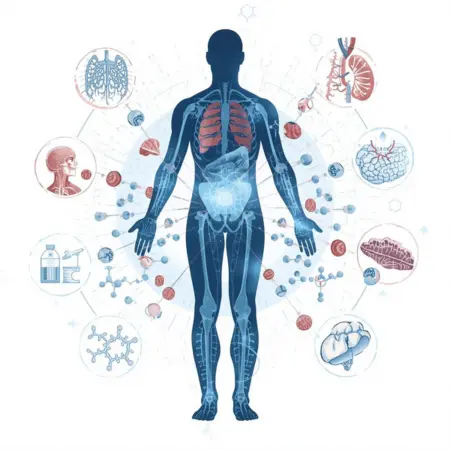
The exam organizes questions by organ systems (e.g., cardiovascular, renal) and physician tasks. You must integrate knowledge; for example, understanding how a drug (pharmacology) affects the heart (physiology) in a patient with diabetes (pathology).
You will face approximately 280 single-best-answer questions. Most are framed as clinical vignettes describing a patient, followed by a question requiring you to identify the diagnosis, mechanism, or next step.

You must be officially enrolled in, or a graduate of, a medical school listed in the World Directory of Medical Schools.
US students register via the NBME website. International students must apply through the Educational Commission for Foreign Medical Graduates (ECFMG).
Once you receive your scheduling permit, book your seat at a Prometric Center. Seats fill up fast, especially during the summer months.
Move from rote memorization to conceptual understanding. The Feynman technique (teaching a concept simply) is highly effective here.
Don’t wait until your dedicated period. Treat your first two years of medical school classes as early Step 1 prep.
Create a study schedule that covers all organ systems. Most students take a 6-to-8-week dedicated study period where studying is their full-time job.
Managing burnout is as important as reviewing Biostatistics Course notes. Schedule breaks, sleep, and exercise to maintain resilience.
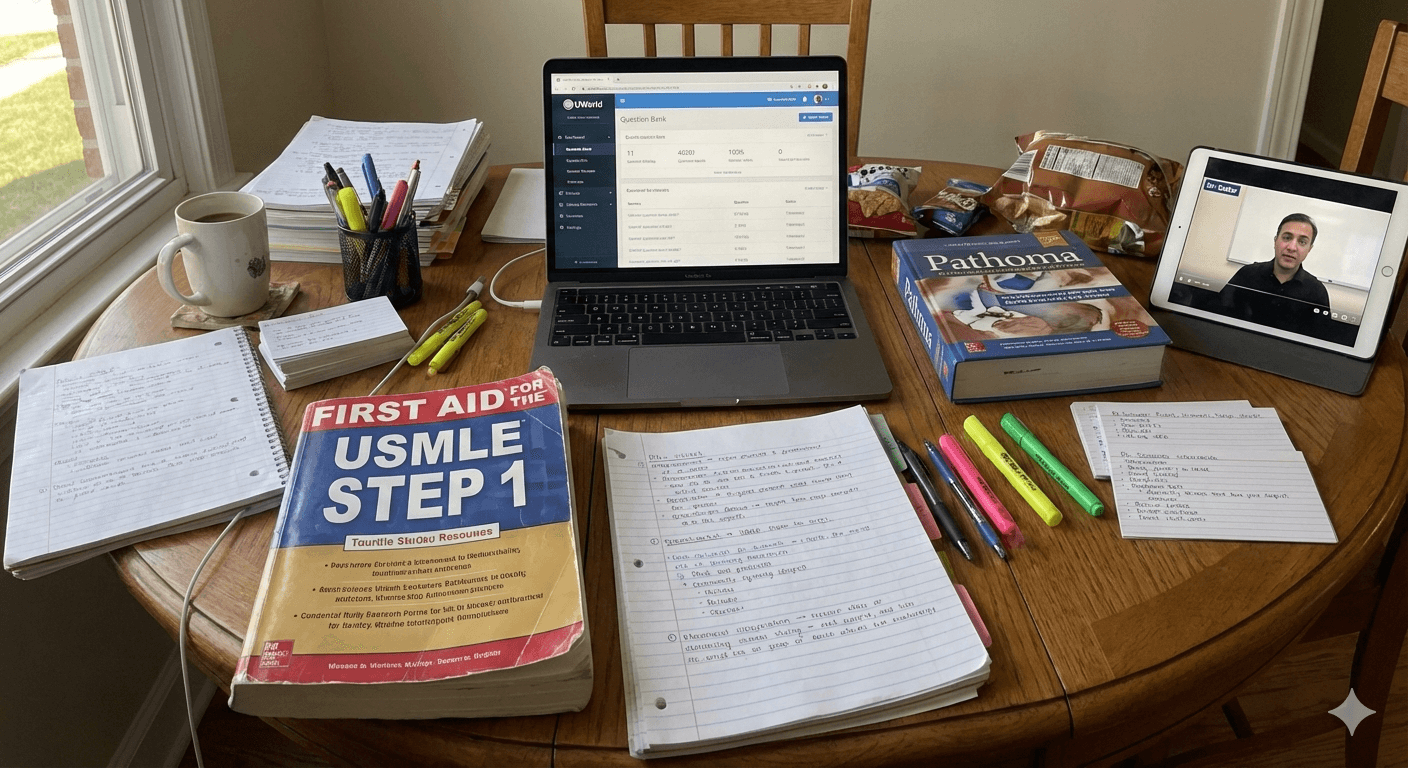
A high-quality Question Bank (like UWorld) is non-negotiable. Doing practice questions teaches you the logic of the exam.
First Aid for the USMLE Step 1 is universally considered the essential study guide. Use it as a checklist for what you need to know.
Tools like Anki help you retain vast amounts of data like Microbiology bugs and drugs through spaced repetition.
Take NBME self-assessment exams periodically. These practice exams provide a score prediction and gauge your readiness.

In the final weeks, simulate the test center environment. Wake up early and build your endurance.
Expect strict security. You cannot bring notes, phones, or watches into the testing room.
Trust your study plan. If you encounter a difficult block, deep breathe and reset. Do not let one bad question ruin the next ten.
You have roughly 90 seconds per question. If you are stuck, flag it and move on.
Step 1 is just the beginning. It is followed by Step 2 Clinical Knowledge (taken during clinical years) and Step 3 (taken during residency).
While the score is gone, the competency it validates ensures you are ready to be responsible for patient lives.
Program directors now look at your application more holistically. A pass on Step 1 is the “ticket to play,” but your clinical grades and Step 2 scores are how you win the game.
Most students take a dedicated study period of 6 to 8 weeks after finishing their pre-clinical curriculum, studying 8–10 hours a day.
Yes. For the vast majority of students, thoroughly mastering First Aid and completing a reputable Question Bank like UWorld is sufficient to pass.
USMLE is the licensing series for MDs (allopathic), while COMLEX-USA is for DOs (osteopathic). Many DO students take both to remain competitive for all residency programs.
The exam consists of approximately 280 questions, divided into seven 60-minute blocks.
You can find sample test questions and practice materials directly on the official USMLE website or through NBME self-assessments.