
One of the most demoralizing moments in medical training is doing everything right, finishing the study resources, grinding through Q-banks, revising diligently, only to open a self-assessment and realize your score still isn’t where it needs to be.
Students often complain of losing valuable points and confidence, not from lack of effort, but from avoidable mistakes in their study strategy, mindset, and exam approach. When it comes to the USMLEs, learning what not to do is as important as mastering content.
In this guide, we break down the most common USMLE mistakes, why they happen, and how high-performing students actively avoid or fix them so you can build a smart, sustainable prep strategy and walk into test day with confidence.
Why Students Make Mistakes on the USMLE: The Real Root Causes
Understanding the root causes of mistakes, not just the symptoms, is one of the biggest mindset shifts successful USMLE candidates make. Once you know why errors happen, you can preempt them instead of constantly reacting to them.
Here are the four core drivers that lead even smart, hardworking students to lose points, waste time, or experience unnecessary anxiety during their USMLE preparation and on exam day:
1. Lack of a Structured Study Framework
Many students approach USMLE prep like “last-minute studying,” reading whatever book or video comes up next, without a clear roadmap. Without a structured study plan, it’s easy to:
- Miss important content areas entirely
- Repeat the same subjects over and over while ignoring other high-yield ones.
- Fail to integrate questions strategically with content review
Random, unstructured studying leads to gaps in understanding that don’t become apparent until self-assessments, often catching students off guard and adding to their stress and self-doubt. By then, correcting those gaps takes an extra week you don’t always have.
How to fix it:
Build a study framework early in your prep before your exam that includes:
- Daily and weekly goals
- Focused content blocks
- Integrated question practice
- Time for review and benchmark exams
A good framework turns prep from chaotic to predictable and trackable.
2. Superficial Learning Over Deep Understanding
A classic trap is confusing familiarity with mastery. The USMLE exams are all about integration. You might have read a chapter three times or highlighted most of First Aid, but that doesn’t mean you understand the material deeply enough to apply it under stress.
This often shows up when students:
- Memorize facts but fail to apply them in clinical scenarios
- Know isolated pieces of information, but can’t see how they connect
- Recall details on flashcards, but freeze during question logic
USMLE isn’t a memory test; it’s a reasoning test. And superficial learning creates false confidence that collapses under timed, multi-layered vignettes.
How to fix it:
Mix content review with active application. For every topic you study:
- Do related timed questions
- Summarize in your own words why each answer is right or wrong
- Connect facts to clinical scenarios
This approach builds true depth rather than surface familiarity.
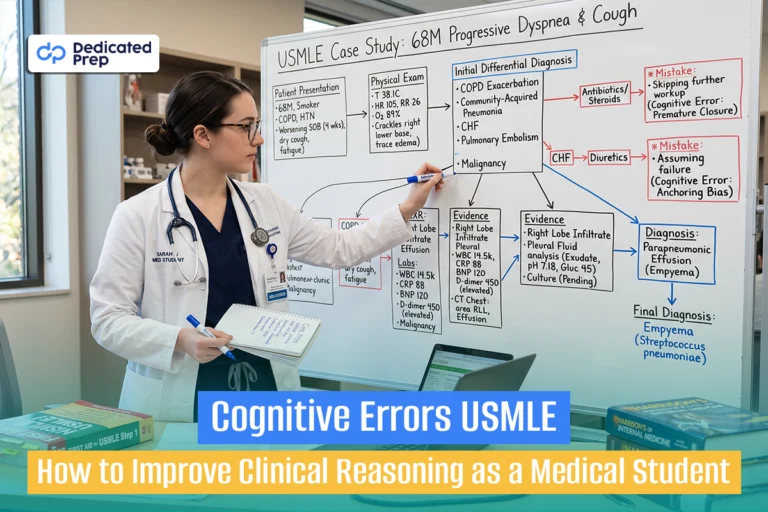
3. Cognitive Biases During Practice and Exam
Even well-prepared students fall victim to certain thinking errors under pressure. These aren’t “content mistakes”; they are mental habits that consistently lead to incorrect answers.
Some common cognitive traps include:
- Premature closure: Choosing an answer before reading all options
- Anchoring: Sticking with an early impression and ignoring new clues
- Availability bias: Overestimating rare diagnoses because they looked familiar
- Confirmation bias: Looking only for clues that support your guess
Some questions are designed to have distractors to distort reasoning and test precision rather than surface recall.
How to fix it:
Train your mind to:
- Read the whole question before answering
- Actively search for disconfirming clues
- Practice “why is the other answer wrong?” as often as “why is this one right?”
Structured review and self-reflection during practice help reduce cognitive traps over time.
4. Neglecting Wellness, Stamina, and Concentration
Many students assume that success is all about how much they study. In reality, how well they manage themselves has an even bigger impact, especially during long question blocks and full-length exams.
Neglecting wellness leads to:
- Burnout
- Reduced concentration
- Slower processing speed
- Difficulty reading long vignettes
- Impaired retention and recall
Even if a student “knows the material,” fatigue and stress can turn simple questions into stumbling blocks.
How to fix it:
Treat your brain like an athlete treats their body:
- Prioritize consistent sleep
- Take short, regular study breaks
- Stay hydrated and eat balanced meals
- Do light exercise to boost blood flow and focus
These habits improve endurance, attention, and long-term recall.
What is Missing in Your Study Planning: USMLE Mistakes That Hurt Scores the Most
Good USMLE content outline prep starts long before exam day, and planning mistakes can sabotage months of work.
Mistake #1 — Starting Too Late or Without a Plan
Delaying serious study or starting without a structured schedule is one of the most common regrets. Students who begin early and plan weekly goals are consistently more successful. A realistic schedule helps balance content review, questions, and self-assessment.
Fix:
Create a draft schedule 3–6 months ahead, then tighten it to specific weeks and daily blocks, including content review and questions.
Mistake #2 — Resource Overload
Juggling too many books, videos, and flashcards leads to superficial knowledge and confusion. Stick to core, high-yield materials that are proven to correlate with USMLE exam patterns.
Fix:
Focus on a few proven resources (e.g., UWorld, First Aid, NBME self-assessments) and review them deeply rather than widely.
Mistake #3 — Passive Learning Instead of Active Practice
Reading or watching videos without doing questions severely limits retention. USMLE scoring is largely about application, not memorization.
Fix:
Use active recall methods such as:
- Flashcards
- Timed question blocks
- Teaching concepts to peers
Question Bank and Assessment Errors to Avoid
Question banks are a major learning tool and should be used strategically, not just as “practice tests” to be completed once. Using them correctly can help build reasoning skills and reveal knowledge gaps.
Mistake #4 — Delaying Question Practice
Waiting to finish all content before starting questions is a trap. Questions should drive content review, not follow it.
Fix:
Begin timed practice questions early and make them a daily habit throughout your prep.
Mistake #5 — Not Reviewing Incorrect Answers Thoroughly
Taking practice questions without deep review wastes your progress. All questions NEED to be reviewed (yes, even the correct ones). Alongside reviewing the correct answers, understanding why you were wrong is where the real learning happens.
Fix:
Maintain an “error journal” of missed questions, categorize why you missed them, and revisit them regularly.
Mistake #6 — Neglecting Practice Exams (NBME/UWSA)
Some students delay full-length practice exams out of fear. This prevents early identification of weak areas and timing issues, leaving gaps you don’t notice until too late.
Fix:
Add NBME or UWSA exams to your plan early and repeat them periodically to track progress.
Mistake #7 — Overthinking or Second-Guessing Answers
Overanalyzing questions often leads students to change correct answers or lose time, both costly mistakes.
Fix:
Train your test-taking instincts:
- Read the question stem carefully
- Identify key clues before answering
- Avoid changing answers unless you have a strong reason
Mistake #8 — Poor Time Management
Time pressure affects many students, especially on Step 2 CK with long, dense clinical vignettes. Not practicing timed blocks during prep means trouble on test day.
Fix:
Build timed practice into your routine, aim for consistent pacing, and block completion under exam constraints.
Mistake #9 — Ignoring Exam Format and Stamina Training
Step 2 CK and Step 3 can be long and mentally demanding. Without previous timed and full-length practice, you risk fatigue and poor decision-making during later blocks.
Fix:
Simulate real exam conditions regularly so your mind and body build endurance for the long day ahead, which reduces your chances of making step 2 CS common mistakes.
Mistake #10 — Focusing Only on Memorization Over Reasoning
Clinical vignettes reward thought process and reasoning, not raw facts. Students who merge clinical knowledge with reasoning perform better in both Step 2 CK and Step 3.
Fix:
Practice creating concept maps and pathways linking symptoms, tests, diagnosis, and USMLE laboratory values management rather than memorizing lists.
Mistake #11 — Sacrificing Sleep, Health, and Social Support
Many students cut sleep and social interaction in the belief that “more studying equals better scores.” In reality, burnout decreases memory, focus, and resilience.
Fix:
Schedule regular breaks, maintain social ties, exercise lightly, and sleep 7–8 hours nightly, especially in your last month of prep.
Get Dedicated Prep’s expert USMLE Tutoring guidance today and avoid costly mistakes in your preparation journey.
USMLE Mistake-Proof Guide for Students
| Common Mistake | What It Costs You | How to Fix It (Action Steps) |
| 1. No Study Plan | Disorganized prep, missed content gaps | Create a weekly schedule with daily targets and checkpoints |
| 2. Resource Overload (FOMO) | Confusion, diluted focus causes first aid USMLE Step 1 mistakes | Limit to high-yield resources (UWorld, First Aid, NBMEs) |
| 3. Passive Learning | Low retention, poor application | Use active recall: explain aloud, make flashcards, teach peers |
| 4. Delaying Question Practice | Weak clinical reasoning | Start timed questions early and make them part of your daily routine |
| 5. Not Reviewing Mistakes Deeply | Repeated errors not corrected | Keep an error log; analyze why you missed each question |
| 6. Skipping NBME/Practice Tests | Blind spots remain, a spreadsheet of mistakes, step 1 USMLE | Schedule NBMEs periodically to assess progress and adjust plans |
| 7. Overthinking on Exam Day | Lost time, incorrect changes during the USMLE class | Read carefully, trust your first logical answer unless clearly wrong |
| 8. Poor Time Management | Unfinished sections, panic | Practice full-time blocks weekly; work on pacing strategies |
| 9. Sacrificing Wellness | Burnout, decreased memory | Prioritize 7–8 hours of sleep, breaks, and light exercise |
How to Use This Table
- Scan the right column during study planning to build a prep setup that actively prevents common pitfalls.
- Add to your notes or printable planner; it’s designed as a quick reference and for minimizing mistakes on the USMLE.
- Consider pairing this with your daily or weekly USMLE insights study routine to keep mistakes from becoming habits.
Understanding the exam structure can prevent these pitfalls, Read our blog: What Is the USMLE Exam? for a detailed overview.
Conclusion: Turn USMLE Mistakes into Mastery with Dedicated Prep
Avoiding common USMLE mistakes is about working smarter, not just harder. Having a systematic plan and hands-on work combined with thorough knowledge, reviewing questions in a specific sequence, and watching your self-care, you can turn the errors into stepping stones to the right direction. It is not merely the content knowledge that is the difference between average and high scores, but rather it is the approach to the application of that knowledge. By identifying cognitive errors and fixing the underlying causes early in your studies, you will not only have a better plan to study, but you will also have more confidence and understanding when you get to exam day. It is not merely a matter of knowing facts to avoid common USMLE errors. It requires:
- Strategy and structured planning
- Active question practice and analysis
- Clinical reasoning integration
- Time management and wellness balance
This balanced approach helps you prepare smarter, making your study time more efficient and your confidence stronger on test day, avoiding USMLE first aid mistakes.
If you want personalized guidance on avoiding these mistakes and building an effective USMLE study strategy, our team at Dedicated Prep offers expert tutoring and customized plans designed to maximize your performance and reduce unnecessary stress.