
As a prospective applicant, you may have countless questions: “When do ERAS applications open? How do I handle the ERAS application timeline 2026? What exactly is an ERAS application? What sections are required?”
It can be tough to stay on top of updates and deadlines while you juggle USMLE prep, clinical rotations, letters of recommendation, and board scores, and on top of that, the ERAS process itself can feel intimidating and confusing.
Missing a key deadline can mean lost interview opportunities. A weak personal statement or poorly organized experiences section can result in no interview invites. And without a clear ERAS application timeline, applicants often submit late or unprepared, which hurts match outcomes and confidence. Not to mention the high costs associated with the application, and that for some students, this may be their only chance to secure a spot in a residency program.
This ERAS application guide is your complete, step-by-step resource that walks you through when to apply, what to include, how to avoid common mistakes, and how to optimize your residency application ERAS strategy so you submit early, submit strongly, and win interviews.
What Is an ERAS Application
The ERAS (Electronic Residency Application Service) is the online system that medical students and graduates use to apply to US residency programs. Using the MyERAS portal, you submit all required documents, including your personal statement, letters of recommendation, USMLE scores, and supporting materials to multiple programs at once.
Residency programs often receive thousands of applications per cycle, which is why clarity and early submission matter. This centralized system simplifies the process and is mandatory for most US residency and fellowship applications.
ERAS Application Example
To help you better visualize what a completed ERAS application looks like, many residency applicants review sample applications that demonstrate how each section is filled out, including personal information, experiences, geographic preferences, publications, and biographic data. Looking at a real-world ERAS application example can help you understand how to format your own entries and present your experiences meaningfully and professionally.
For instance, the sample ERAS application templates break down:
- Experiences (clinical, research, volunteer work)
- Geographic and setting preferences
- Honors, awards, and publications
- Specialty-specific questions
Using these examples as references, not to copy, but to inform how you structure your details, can make your own ERAS application more compelling and streamlined for program directors to review. Here is a sample.
ERAS Application Timeline 2026 for Residency and Fellowship
Here’s the official 2026 ERAS fellowship application timeline. Know these dates to plan your preparation and make early submissions.
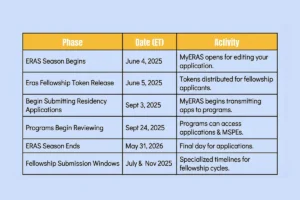
Practical Tip: All ERAS applications submitted between September 3 and 24 will show as “submitted on Sept 24” to programs, so aim to complete early to ensure your documents are available when reviewers begin seeing them.
What Are the Sections of the ERAS Application
A complete ERAS application includes multiple sections; each one contributes strongly to your residency match success. Here’s what you must complete:
- Personal Information & Biographical Details: Everything from your contact info to your AAMC ID and medical school record.
- Personal Statement: Your narrative on why you are choosing this specialty and what makes you a competitive candidate. Here you read all about the residency personal statement.
- Experiences Section: Detailed descriptions of clinical rotations, research, leadership positions, volunteer work, publications, and awards.
- Letters of Recommendation (LoRs): At least three strong letters, ideally from clinicians or mentors who know your work well.
- Medical Student Performance Evaluation (MSPE) & Transcripts: Your school’s evaluation and verified academic transcript.
- USMLE/COMLEX Scores: These should be officially reported. Plan to take your USMLE exam at least 1 month before the deadline to ensure you have your results in time for submission.
- Program Signaling & Geographic Preferences: Some specialties allow applicants to signal interest in specific programs; use this strategically.
Visit our website, Dedicated Prep’s match program, to learn more about tailored ERAS services and start your journey toward residency confidence today!
High-Impact ERAS Application Optimization Strategies
Successfully submitting your ERAS application isn’t just about hitting dates; it’s about how well your materials communicate your story and how strategically you present your candidacy to programs. The most competitive applicants invest time refining each section to ensure clarity, professionalism, and alignment with their chosen specialties.
1. Craft a Compelling Experiences Section
Your ERAS experiences (clinical, research, leadership, volunteer work) are a key area that programs scrutinize. Simply listing roles won’t be enough; your descriptions should highlight specific actions you performed, the skills you gained, and how those experiences shaped your medical path. Programs value clarity, relevance, and depth over quantity.
Tips:
- Include only meaningful, recent experiences (avoid outdated or irrelevant roles).
- Use professional language and full sentences, not casual abbreviations.
- Quantify impact (e.g., “cared for 20+ patients daily”) whenever possible.
2. Tell Your Story Across the Application
Each section, especially your personal statement and experience descriptions, should work together to tell a cohesive narrative about who you are, what motivates you, and why you are a strong fit for your specialty. Programs want to see consistency between your goals, experiences, and plans.
What This Looks Like:
- Your personal statement connects seamlessly with your clinical and research experiences.
- Your CV highlights skills that directly support your narrative.
- There are no gaps or inconsistencies in your story.
3. Organize Documents So They Are Easy to Review
Residency programs often skim applications, especially in early review rounds. Making your documents easy to navigate and error-free boosts the chance your application gets full attention.
Checklist:
- Proofread every section grammar matters.
- Keep formatting clean and consistent across experiences.
- Use clear headings and avoid cluttered paragraphs.
4. Tailor Your Program List & Signals Strategically
Even after completing each ERAS section, strong applicants spend time researching programs to target applications where their profile aligns well. This strategic selection increases interview chances and reduces wasted application fees.
Action Steps:
- Identify programs that match your academic profile, interests, and career goals.
- Use tools (like ERAS worksheets and specialty data) to refine your list, not just apply everywhere.
5. Prepare for Interviews Early
Once your application hits programs, interviews are next. Preparing early, even before application submission, helps you articulate your experience, ask thoughtful questions, and present your narrative confidently. Practicing mock interviews with mentors or peers can significantly improve performance.
Interview Tips:
- Practice responding to common behavioral questions.
- Research each program before the interview.
- Prepare thoughtful questions that show engagement and interest.
Why This Matters:
By optimizing your materials and presentation, not just completing the,m you elevate your ERAS application from functional to competitive. Reviewers notice clarity, professionalism, and strategic storytelling, and this often translates into interviews and higher match rates.
How to Craft a Standout Personal Statement
The personal statement is one of the most important narrative pieces of your ERAS application. It’s your story, and it needs to be compelling, focused, and personal.
Tips for a strong personal statement:
- Start with why you chose your specialty and what drives your career goals.
- Avoid just listing your CV; instead, highlight memorable experiences that shaped your path.
- Address any weaknesses or gaps, positively show growth and reflection.
- Keep it professional, clear, and concise.
This is your chance to connect with program directors and make your application memorable.
Letters of Recommendation and Their Best Practices
Letters of recommendation should come from people who know you well and can speak to your strengths. Usually:
- At least 3 letters are preferred.
- A fourth letter can help if it adds a unique perspective.
- Make sure your letter writers upload through the official Letter Portal.
Always provide your letter writers with your personal statement, CV, and target program list it helps them write specific and strong letters.
ERAS Application Worksheet
One of the most helpful tools before you begin entering data into MyERAS is an ERAS application worksheet. These worksheets are official documents provided by AAMC that let you gather and organize your information ahead of time, such as experiences, letters of recommendation, exam scores, and personal details, so you don’t have to fill everything in on the spot.
The 2026 ERAS Residency Applicant Worksheet is designed to get you started with:
- Listing up to 10 selected experiences
- Identifying your most meaningful experiences
- Preparing answers for specialty-specific questions
- Organizing contact and educational information before uploading it to MyERAS
This worksheet helps students prepare their information before entering it into MyERAS. Downloading and completing the worksheet before you log into ERAS helps keep your application accurate and reduces the risk of errors or missing details when it’s time to submit.
How ERAS Application Fees and Costs are Calculated
ERAS application fees vary based on the number of programs you apply to. MyERAS automatically calculates your fee total when you select programs, and payment is made online.
You may also encounter additional ERAS fellowship application costs:
- ERAS Token Fee (ECFMG): ~$165 for IMGs.
- USMLE/COMLEX Transcript Fee: ~$80 per transcript.
Planning your application strategy, like focusing on programs that align with your profile, can help keep your total costs manageable.
ERAS Application Fee Calculator to Estimate Exam Costs
Want a quick way to estimate what your ERAS application might cost? While MyERAS automatically calculates your fees when you select programs to apply to, understanding how those costs are figured helps you budget and plan more wisely before submission.
For 2026 residency applications, the ERAS application fees are based on the number of programs you apply to per specialty:
- 1–30 programs: about $11 per program
- 31 or more: about $30 per program for every program beyond the first 30
For example, if you apply to 30 programs in one specialty, your application fee would be roughly 30 × $11 = $330. If you apply to 40 programs, your fee could be (30 × $11) + (10 × $30) = $630.
Additional costs to factor in include your USMLE transcript fee (~$80) and COMLEX-USA transcript fee (~$80), which are each charged once per season.
Tip: Using an ERAS fee calculator or worksheet (many residency planning tools offer one) can help you model different application strategies and pick the number of programs that balances reach with cost efficiency.
What are red flags on a residency application
Common eras application mistakes can be prevented to a great extent, which will help you in winning more games.
- Submission Too Late: Applications start being formally reviewed by the program on Sept 24, 2025, and therefore, submit early.
- Incomplete Documentation: LORs that are not completed, unavailable transcripts, or missing scores may slow down the review.
- Low-Impact Personal Statement: Generic or unfocused personal statements do not help you shine through.
- Weak Program Strategy: It can be a time and resource waster by being too broadly applied unless research is done. Focus on building a strategic list of programs that align with your academic profile and career goals.
- Missing follow-ups: Once submitted, check your MyERAS inbox regularly after that to receive messages or invitations to an interview.
Conclusion: Own Your ERAS Application with Confidence
It is the most crucial to navigate the ERAS application process, between knowing what an ERAS application is and the euphoria of mastering an ERAS application timeline to a winning personal statement, it may seem overwhelming. It does not matter whether you are writing letters of recommendation, settling your USMLE scores, or polishing your personal statement; having a clear roadmap is the difference. Early application, a complete and well-considered application, and a consistent ERAS application timeline will put you ahead of the game and give you a higher chance of getting interview invitations and matching to a desired residency or fellowship.
Ready to Excel with Your ERAS Application
Completing your ERAS application isn’t enough; making it outstanding is the real challenge. If you want one-on-one guidance, help with your personal statement, CV polish, or interview preparation, Dedicated Prep offers expert mentorship and strategic coaching for applicants targeting competitive specialties.
FAQs
- When are ERAS applications due for 2026?
ERAS residency application timeline opens June 4, 2025, and residency applications can be submitted beginning Sept 3, 2025; programs start reviewing on Sept 24. - What is required for an ERAS application login?
You need your personal information, personal statement, CV, USMLE/COMLEX scores, LoRs, MSPE, experiences, and optional preferences. - What are 5 questions not to ask in an interview?
In a residency interview, avoid questions about salary, vacation, or benefits, overly personal inquiries about the interviewer’s life, asking where other applicants are applying, repeating basic info already on the program website, or questions
that make you sound unprepared or focused more on perks than training.
These questions can give a negative impression to interviewers.
- When is the deadline for the ERAS application in 2026?
For the ERAS application deadline 2026 cycle, the season ends at 5 p.m. ET on May 31, which is the deadline to upload and submit all documents for residency and fellowship applications. An earlier submission in September gives you a better chance of interviews when programs begin reviewing.
- What happens if I don’t match?
Unmatched applicants can participate in the SOAP (Supplemental Offer and Acceptance Program) to apply to unfilled positions.